
The Project Text progression will allow students to continue their exploration of the trickster archetype that we began in the Project Space progression. This new progression will also provide the opportunity for genre differentiation. Students will read Shakespeare’s, A Midsummer Night’s Dream and connect this most beloved classical play to real-world nonfiction published in The New York Times. Students will also read material relating to women in Tudor England and a piece that illustrates the extensiveness of patriarchal oppression in England during the Elizabethan period. Project Text’s carefully scaffolded reading and writing assignments will enable students to analyze how cultural mores and norms impact marriage choices, personal liberty, and cultural diversity.
LESSON TOPICS
- Discuss critical reading strategies
- In-class reading of Shakespeare’s, A Midsummer Night’s Dream, Acts I & II
- Class discussion of each of the two acts
- Students complete Acts I & II discussion questions in class
CRITICAL READING

William Shakespeare’s A Midsummer Night’s Dream ISBN: 9798738986734
CRITICAL READING STRATEGIES
- Annotate the text
- Contextualize – place text in its original historical and cultural context
- Reflecting on challenges to your beliefs and values
- Paraphrase – put the text in your own words to make sense of it
- Outline to reveal basic structure of text
- Summarize the text to put it in words you understand
- Explore figurative language
- Look for patterns of opposition
- Evaluate the topic of an argument – look for the claim(s) the writer wants the audience to accept
- Recognize emotional manipulation – look for false or exaggerated appeals
- Judge the writer’s credibility
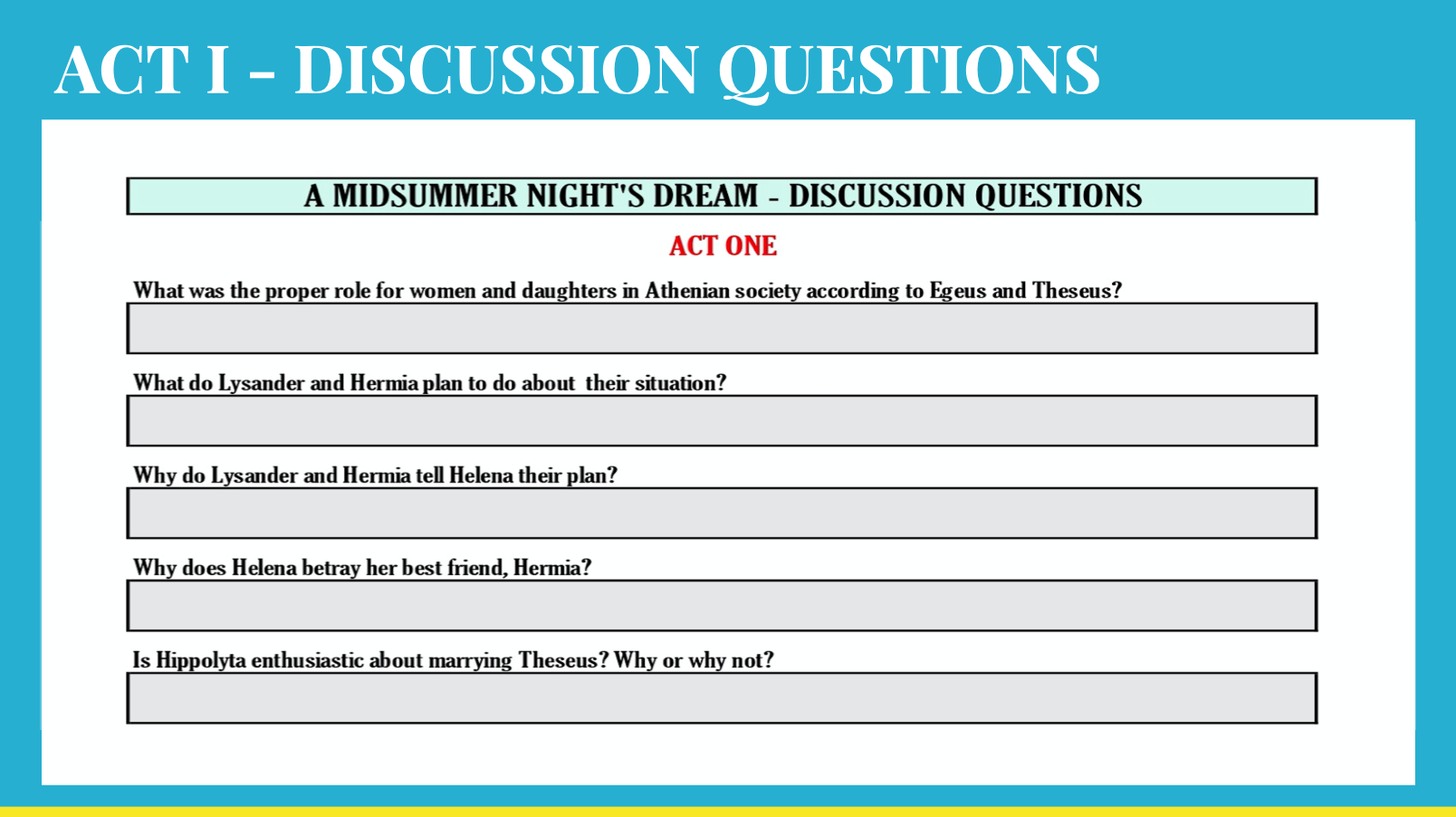
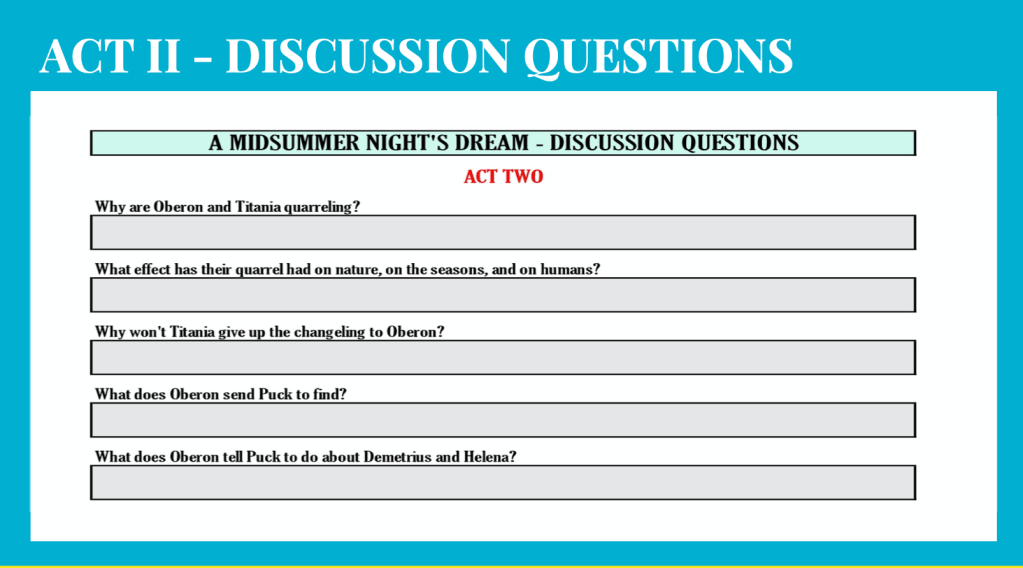
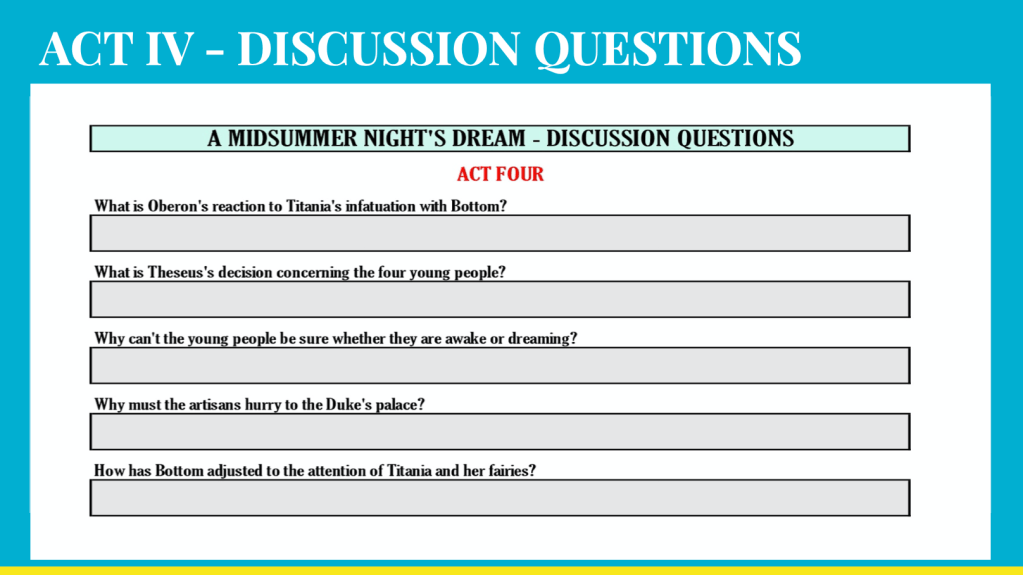
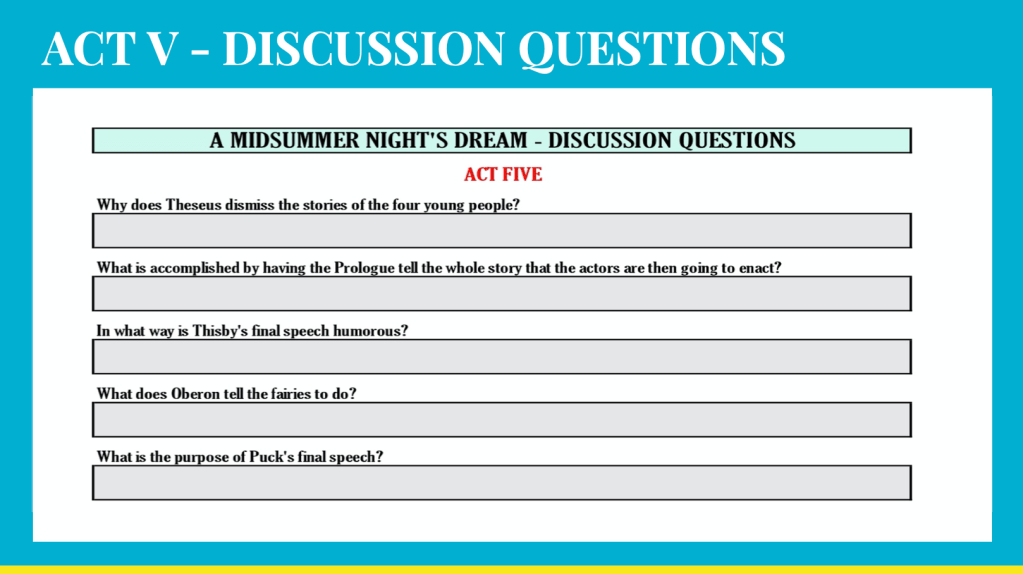
ACT I-V GUIDED READING DISCUSSION QUESTIONS

IN-CLASS ACTIVITY
We will read Acts I and II as a class and complete the discussion questions as a group.
As we read, we will actively use as many critical reading strategies listed above as possible.
During the annotation process, be sure to write down thoughts, connections, questions, predictions, inferences, and interpretations.
Take special care to identify trickster characters within the text and note the trickster’s actions and the impact the actions have on other characters in the play.
HOMEWORK
INSTRUCTIONS: For tonight’s homework, please read Acts III, IV, and V, annotate, and complete and submit the discussion questions. Be prepared for an in-class annotation check during our next class meeting.
 English Writing Studies